An In-Depth Interview with Roy Yehezkel, CDO: How Design Became a Core Growth Engine in the iGaming Industry
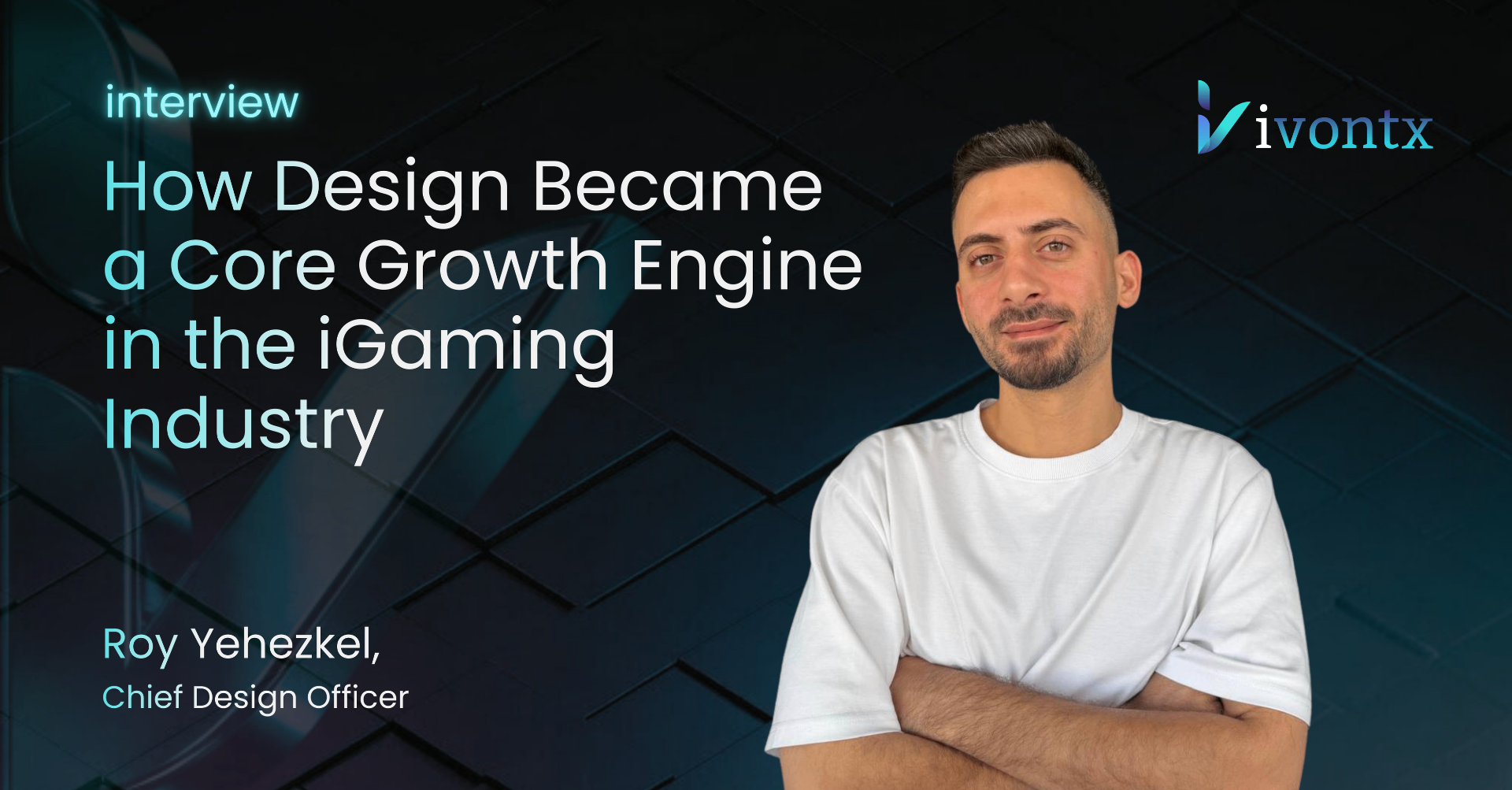
For many years, design in the iGaming industry was viewed as a supporting layer. A visual finish added to an already built product, often at the final stage of development. In recent years, this perception has fundamentally changed. More companies now recognize that design is not merely about appearance, but a strategic component that directly impacts product structure, user trust, regulatory compliance, and business performance.
In an extensive interview, Roy Yehezkel, the company's Chief Design Officer, explains how his role extends far beyond UI and UX, and how design has become a language that connects technology, regulation, and business objectives.
Let's start with the basics. How do you define the role of a CDO today?
"A CDO today is not a lead designer and not a studio manager. It is a strategic role. My responsibility is to ensure that the entire product, from internal logic to the final interface, speaks one clear language. A language that serves the user, regulatory requirements, and the company's business goals at the same time."
According to Yehezkel, design is the way a product communicates with the world. "Users do not see code or system architecture. They see design decisions. Every one of those decisions is also a business decision."
Why does design carry such a significant weight specifically in the iGaming industry?
"This is an industry built on trust. Users need to clearly understand where they are, what is allowed, what is restricted, and what each action means. Any lack of clarity damages trust, and once trust is damaged, the product suffers."
Yehezkel emphasizes that regulatory complexity requires deep design thinking. "There are processes you cannot remove, such as user verification, activity limits, and transparency requirements. The question is how you present them. Good design does not hide regulation. It makes it clear and non threatening."
How does design translate into actual business performance?
"Many people still think design is a matter of taste. In reality, it is one of the most measurable tools we have. Small changes in hierarchy, flow, or information structure can have a dramatic impact on user behavior."
He explains that design work today is driven by data as much as creativity. "We work with analytics, experiments, and deep testing. Every decision is evaluated through the lens of how it affects usage, user retention, and product stability."
How involved are you in product and technology decisions?
"Very involved. Design cannot come after everything has already been decided. I am part of early stage discussions around product definition, architecture, and roadmaps. Sometimes a specific technical decision will lead to a weaker user experience, and that is the point where we stop and rethink."
Yehezkel describes the role as a bridge. "I connect development, product, and management. My job is to make sure decisions are made from a holistic perspective, not based on isolated constraints."
How do you handle operating across different markets and regulatory environments?
"That is one of the biggest challenges. A global product cannot look and behave exactly the same everywhere. At the same time, it must maintain a clear identity."
The solution, he says, is a flexible design system. "We build a unified design language with clear rules that allow localization without breaking the product. This makes it possible to adapt processes, messaging, and flows to a specific market without starting from scratch."
How do you see the role of the CDO evolving in the coming years?
"The role will only become more important. As products grow more complex and regulation becomes stricter, the need for someone who holds the full picture continues to increase."
According to Yehezkel, companies that still treat design as an external layer will struggle to compete. "Design must be part of the table where decisions are made. Not at the end, but at the beginning."
In your view, what is the difference between good design and great design?
"Good design works. Great design makes a product feel clear, safe, and intuitive, even when it is highly complex. When users do not have to think too much, and the system feels logical, that is when we know we have done our job well."
Conclusion
The interview with Roy Yehezkel highlights a deep shift in how design is perceived within the iGaming industry. The CDO is no longer a visual or supporting role, but a strategic leader who shapes how products are built, operated, and scaled.
In an era where technology, regulation, and user experience are deeply interconnected, design has become one of the central growth engines for companies operating in the global iGaming market.